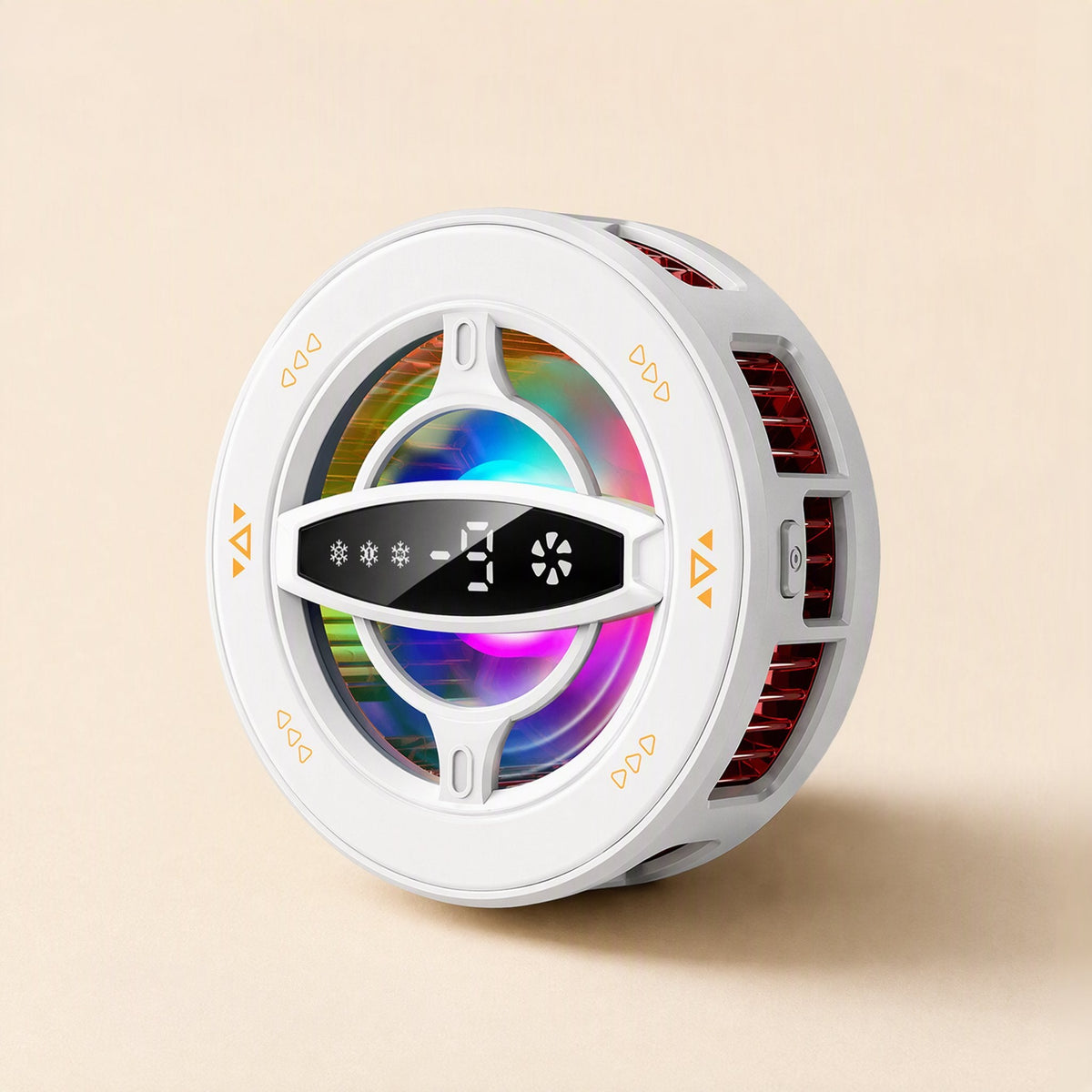
Magchill Mobile Phone Radiator – Magnetic Clip-On Cooler, 15W
Magchill Mobile Phone Radiator – Magnetic Clip-On Cooler, 15W
In stock
Couldn't load pickup availability
Shipping and returns
Taxes and shipping are calculated at checkout. Read the shipping policy · Read the returns policy
Questions before you order? Contact our support team for help choosing the right option.
Magchill is a magnetic mobile phone radiator that keeps your phone cool during intense gaming, streaming and video sessions. It attaches to the back of your phone with magnets and uses flat-plate semiconductor refrigeration to draw heat away from the device. A Type-C connection powers it, and it works with phones and tablets.
Why people choose Magchill
- Magnetic attachment: magnets hold the radiator securely on the back of the phone, with no tape or case swaps needed.
- Semiconductor cooling: the flat-plate design uses semiconductor refrigeration to pull heat from the device.
- Built for gaming: helps keep your phone cooler during long mobile gaming sessions.
- Works with phones and tablets: compatible with Apple phones, Android phones and tablets.
- Type-C connection: powered through a Type-C interface.
- Lightweight build: plastic and alloy construction at 150g.
How to use
Attach Magchill to the back of your phone so the magnets hold it in place, then connect it through the Type-C interface. Keep it on while you game or stream to help manage heat.
Specifications
| Cooling method | Flat-plate semiconductor refrigeration |
|---|---|
| Attachment | Magnetic back |
| Power | 15W |
| Weight | 150g |
| Material | Plastic and alloy |
| Interface | Type-C |
| Compatible devices | Tablets, Apple phones, Android phones |
Good for
Mobile gamers, streamers and anyone who wants to keep a phone or tablet cooler during long gaming, streaming or video sessions.
Questions before you choose
Can it be used with a tablet? Yes, it works with tablets as well as Apple and Android phones.
How does it attach? Magnets on the back hold it securely to the phone.
What connection does it use? It connects through a Type-C interface.